
PH1 Combined
Lectures + in-person lab in one course.
PH1 Combined
One course registration.
This course equips physical therapy professionals with foundational skills to evaluate and treat patients with pelvic health dysfunction, with an emphasis on underactive pelvic floor muscle conditions.
PH1 is offered in two ways: PH1 Combined (100% in-person) and PH1 Webinar, PH1 Lab (Online and In-Person).
Lectures + in-person lab in one course.
One course registration.
Register separately for each course.
Complete the webinar before the in-person lab.
Successful completion of PH1 includes the completion of either the PH1 Combined course or the combination of PH1 Webinar and PH1 Lab courses. PH1 includes both lectures and in-person lab components. While registration is separate for Ph1 Webinar and PH1 lab courses, one must complete both to successfully complete the PH1 level.
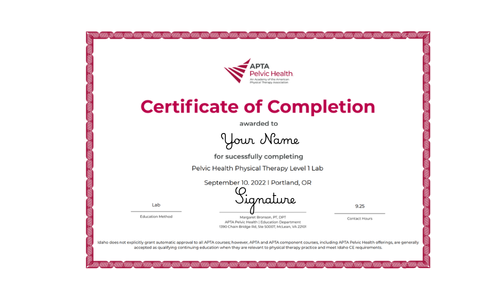
Free access to Urogynecological Clinical Evaluation and Treatments, Level 1 (2.0 contact hours) online video course.
Lecture topics include the anatomy of the pelvic girdle, physiology of micturition, dysfunctions of the lower urinary tract and pelvic muscles, patient history examination, and testing and treatment interventions for underactive pelvic floor muscle conditions. Additional areas of focus include urogynecologic surgeries, medication considerations, prevention of pelvic floor dysfunction, and documentation best practices.
The in-person lab activities build on the lecture content through hands-on practice of external and internal vaginal examination techniques, with an emphasis on applying evaluation and treatment skills in clinical practice.
Upon completion of PH1, participants will be able to:
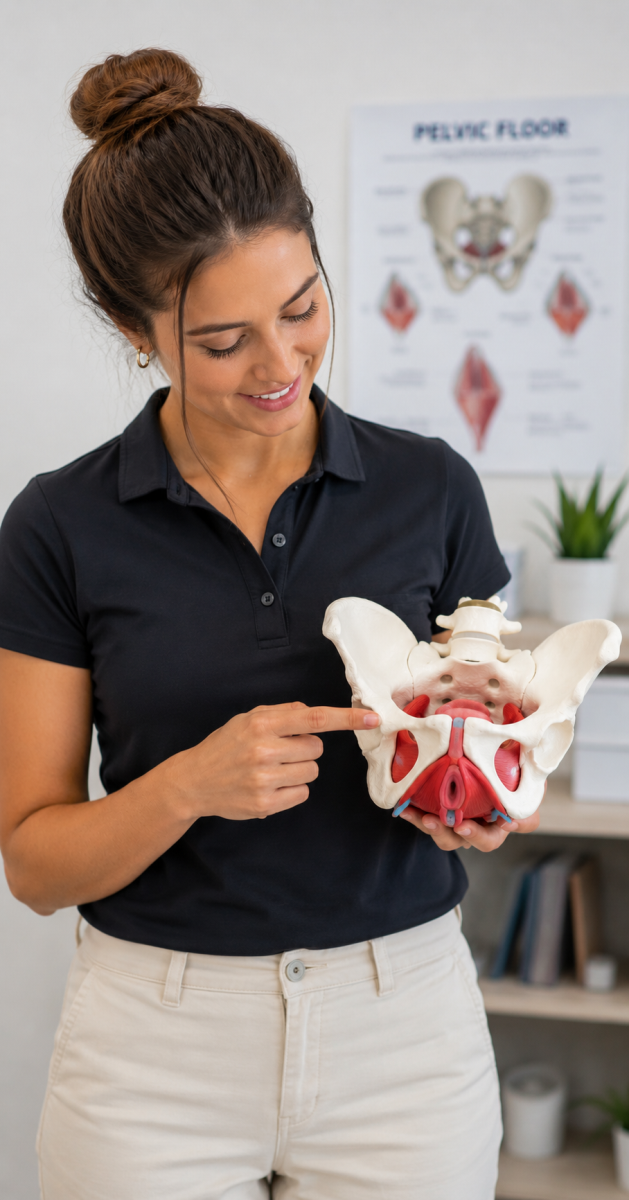
Explore how PH1 can help you prepare for clinical rotations, connect classroom learning with clinical practice, and build a foundation for your pelvic health career.
Read the Article →
This course is a required course for those pursuing the Certificate of Advanced Practice in Physical Therapy in Pelvic Health (CAPP-Pelvic). To be eligible for the CAPP program, you must complete all required courses directly through the Academy of Pelvic Health Physical Therapy. Prerequisite courses completed outside the Academy will not meet the eligibility requirements. Participation in this course does not obligate you to pursue the CAPP program. It can be taken independently of the certification pathway.
Choose the recommended course order that matches your PH1 format as you work toward CAPP-Pelvic.
12-month lab requirement: You must complete the PH1 and PH2 Labs within 12 months of attending the PH1 and PH2 webinars.
Complete the PH1 and PH2 webinars first, then take PH1 Lab followed by PH2 Lab over the same weekend to save on travel. Come prepared for a fast-paced experience, as PH2 content builds directly on PH1 concepts.
Check our resource regarding CAPP course progression and CAPP eligibility.
Attendees must be present throughout the duration of the course. Contact hours will be forfeited and the attendee will be dismissed if the attendee:
To advance to the next course level, the attendee who missed the above will have to retake the course at her/his/their own expense.
Should extenuating circumstances arise, it is the responsibility of the participant to notify a course faculty member of the need to leave. Consideration for course completion will be made on a case-by-case basis.
Webinar Participation & Engagement
You must actively participate throughout the entire webinar. If you are not responsive when you are being called on during the webinar, your course credit may be forfeited and you may be required to retake the course. We have included planned break times in the schedule, however, instructors may also announce any additional break times during the course. If you have any technical difficulties accessing Zoom or the Learning Center, you must immediately contact hello@aptapelvichealth.org to let us know.
Special Accommodations
Instructors typically ask participants to keep their cameras on for attendance purposes and during case discussions or interactive activities. If you need to briefly turn your camera off—for example, to breastfeed—you may privately message the Teaching Assistant using the Zoom chat feature. Teaching Assistants introduce themselves at the beginning of the course and actively monitor the chat for questions and updates throughout the session.
Expectations & Requirements for PH1 Combined and PH1 Labs
The Academy of Pelvic Health Physical Therapy is committed to providing a safe, inclusive, and professional learning environment for lab activities. Lab participation is an essential component of our courses, offering hands-on experience that builds clinical confidence and competency in pelvic and perinatal physical therapy practice.
During all pelvic health lab sessions, participants are expected to take on both roles—the examining “therapist” and the **“patient.”**Lab activities are conducted in small groups of two to three participants to promote guided, hands-on learning. Participants will participate in comprehensive situational lab scenarios to integrate learned skills.
The specific vulvar, vaginal, rectal, and/or other lab activities, along with their sequence, are detailed in the Course’s Time Ordered Agenda. In summary, activities may include:
Visual assessment and palpation of external and internal anatomy are essential for developing safe and effective examination skills. Appropriate draping and positioning will be maintained throughout all activities to ensure participant comfort and professionalism.
During vulvar, vaginal, or rectal palpation, some participants may experience physical discomfort. External and internal examinations performed in the course pose no greater risk than a standard gynecologic or colorectal examination. Participants are encouraged to communicate openly with their lab partners and instructors to maintain a respectful and supportive learning environment.
The Academy welcomes all PTs, PTAs, 2nd and 3rd year SPTs/SPTAs to participate in this course regardless of gender identity, medical condition, or pelvic anatomy.
The Academy uses a water-based, glycerin-free lubricant (Slippery Stuff®) for all lab activities. If the participant has any known sensitivities or allergies to any of the ingredients in this lubricant, they are encouraged to bring their own preferred lubricant to use during lab sessions.
Participants who are actively menstruating will receive menstrual discs (e.g. softcup) to enable them to participate in internal vaginal examinations. Menstruating participants can fully participate in labs.
Participants with a confirmed or suspected pregnancy must provide a signed medical release from their healthcare provider authorizing participation in all examination activities. It is recommended that participants share the course’s Time Ordered Agenda, which outlines the specific lab activities, with their provider when seeking clearance.
During course registration, participants are asked to disclose any relevant medical conditions and complete a lab participation opt-in form indicating one of the following:
Participants who are unable to participate as a “patient” in lab activities due to their anatomy, a medical condition, or personal circumstances may choose to bring a medical model. If you are still not sure whether you need a medical model, please review the information below.
Below is a list of common scenarios in which a participant may choose to bring a medical model or opt out of the internal vulvovaginal and/or rectal lab activities:
It is the participant’s responsibility to ensure that their medical model completes and submits the Medical Model Consent Form (https://educationforms.softr.app/medical-model-form) so that our Academy faculty can prepare accordingly. The participant must communicate lab participation expectations with their model and handle all arrangements with their medical model.
Bringing a medical model offers the most effective hands-on learning experience, but is not required. Participants who are unable to bring a model may receive alternative accommodations, such as participating in groups of three, practicing on synthetic models, or engaging in observation activities.
Participants must disclose any need for special accommodations during course registration. If a new circumstance arises after they register that limits participation in internal lab activities, the participant must submit a Special Accommodations Request Form (https://airtable.com/appt2d86HaesJEHfG/shrszLaA9OIk93cDL) at least 1 week before the course.
Participants must disclose any need for special accommodations during course registration. If a new circumstance arises after they register that limits participation in internal lab activities, the participant must submit a Special Accommodations Request Form (https://airtable.com/appt2d86HaesJEHfG/shrszLaA9OIk93cDL) at least 1 week before the course.
Unless otherwise noted in the course description, the Academy of Pelvic Health Physical Therapy does not independently seek approval for course Continuing Education Unit (CEU) numbers in each state. It is the responsibility of each participant to submit their own CEU applications within their respective states. We are committed to assisting you in obtaining and supplying any required documentation for your CEU application. Historically, our course participants have consistently encountered no difficulties in securing approval for continuing education credits (CEUs) upon submission to their state's board.
Before registering, please review the Academy of Pelvic Health Physical Therapy’s Event Terms & Conditions at www.aptapelvichealth.org/event-policy.\
By registering, you confirm that you have read, understood, and agree to all policies outlined therein, including:
You also acknowledge that:
Select a highlighted quote to read the full testimonial.
Excellent instructors and organization. All questions were answered with detail and clarification. Great team!
I loved this webinar format. It was very accommodating, easy to access, and I felt I was given a plethora of information!
Great intro to pelvic health physical therapy!
The instructors were VERY knowledgeable and I liked that there were multiple instructors in this webinar. Case studies were nice when you broke down the class into groups to get more participation from all students.
I really liked the webinar capability. I thought it was easy to navigate and liked that you didn’t have to travel to the course. I also really enjoyed the breakout cases during the course… I thought it was a great course and am excited to take the lab and other levels.
"Both presenters were very knowledgeable and helpful when answering questions in the chat. Very comprehensive material. This webinar was very informative, I felt like I learned a lot."
"The interactive portions helped engage recall and kept me engaged. , case studies, preparing us to take skills into the clinic right away, prerecorded content was good, Having the outline of what we were covering so I could add my own notes to my printouts was very helpful"
"I have taken a level 1 course through another education provider previously but I felt I got so much more information from the Academy's level 1, I'm excited to continue on and take others in the future!"
"I enjoyed the class engagement and the content. Everything about the course was great. I really enjoyed the many different learning methods that were given throughout the course."
"Excellent instructors and organization. I really liked the webinar capability. I thought it was easy to navigate and liked that you didn’t have to travel to the course. I also really enjoyed the breakout cases during the course. I thought it was a great course and am excited to take the lab and other levels."
I loved all the anatomy and physiology we learned and reviewed. I don't recall learning this much in HW1 6 years ago. Instructors worked well as a team and did great with all the technology. The slides with friends was very fun and interactive. I really liked this class!
"This was a wonderful course experience and I walked away feeling like I gained a much much better understanding of pelvic health PT ... I left each day inspired to come back tomorrow and with an even stronger desire to go into pelvic health as a PT."
I enjoyed talking through the cases and hearing the various perspectives different people offered in real time.
Content was amazing, exceeded my expectations. I have also previously taken a level 1 course through another company but I felt the Academy's level 1 was much more comprehensive and detailed.
I absolutely loved this course. I loved the instructors! I think they did a great job and were always answering questions. They gave very thorough information and made it easy to learn. I absolutely loved the slides with friends!
Going into this course as a student, I was nervous on my ability to participate in group activities due to my lack of experience as a practicing physical therapist. I think the organization of prompted, small group discussions allowed me to participate as well as hear valuable clinical experience from my peers. The amount of lecture time vs. break time was appropriate, and I felt engaged throughout the whole weekend.
"Very comprehensive and offered a lot of tools that were easy to apply. The lab activities were very educational and helpful in my learning as I value hands-on practice."
"I learned more than what I thought and a GREAT emphasis placed on more than the internal portion of exam, I really enjoyed all of the material we covered and the way the course was set up with learning material in the morning and doing lab in the afternoon."
Great intro to pelvic health physical therapy!
I loved being in a room with seasoned clinicians, new graduates, and students. We all were able to come together in a room to share experiences and learn from one another in such a safe environment.
This was a wonderful course experience and I walked away feeling like I gained a much much better understanding of pelvic health PT and what it means to treat this population. The material was delivered in a very accessible yet thorough manner which made me feel like I was building true content knowledge. I left each day inspired to come back tomorrow and with an even stronger desire to go into pelvic health as a PT.
I really found that having to perform as patient and physical therapist helped better understand and relate to patients in the future to better explain what to expect from an examination. I think this gives individuals the knowledge and empathy for patient centered care a better understanding.
Valuable- not just covering diagnoses or about pelvic health, but incorporating how to treat & go about POC with patient examples. Enjoyed: The environment was made to be less intimidating to those with maybe higher anxiety going into the course, especially for the assessment/lab portion of exam. Staff handled personal concerns in a professional manner.
This course was fantastic! Erica, Whitney, and Elizabeth were amazing. I loved how enthusiastic they were regarding all the material they presented throughout the course. I would highly recommend this course to all my other therapist friends interested in pelvic health.
Great course, amazing instructors and super informative. I feel prepared to start treating pelvic patients on Monday.
Make the most of your travel by choosing PH1 and PH2 Labs offered back-to-back over the same weekend. To follow this option, first complete PH1 Webinar and both PH2 webinars: Bowel Dysfunction and Pelvic Pain.
Complete PH1 Lab before PH2 Lab. Both labs must be completed within 12 months of attending the corresponding webinars.
Check lab dates and locations to find a back-to-back weekend before registering.
As a reminder, to complete PH1, one must either successfully complete the PH1 Combined course or complete both the PH1 Webinar and PH1 Lab courses.